
Why I Switched to a Multi‑Chain Browser Wallet — and Why rabby Deserves a Look
Интернет-казино, веб-сайты, игра в пай-гоу-покер, казино Сука тест.
April 22, 2025Whoa! I know that sounds dramatic. I installed another wallet extension last month and braced for bloat and pop-ups. My gut said “here we go again,” but then somethin’ interesting happened. The wallet actually made interacting with multiple chains less annoying, not more. I’m not kidding — it removed friction that used to slow me down.
Okay, so check this out—before I found this workflow I was juggling five different extensions, each with its own quirks and accidental approvals. That was messy. Honestly, that part bugs me. At first I thought a single extension for everything would be slower or insecure. Actually, wait—let me rephrase that: initially I thought consolidation meant compromise, though that turned out not to be the whole story.
Here’s the thing. Multi‑chain in theory is straightforward. In practice, network switches, token displays, gas estimation, and dApp approvals make it a mess. My instinct said the smart move was to use wallet-per-chain. But after using a modern multi‑chain extension I realized most of the friction was UI and permission handling, not the chains themselves. On one hand I valued separation; on the other hand the repeated seed backups were annoying and error‑prone. So I started testing wallets that promised both multi‑chain breadth and compartmentalized security.
Short story: some of these wallets nailed it. Others felt like concept art. The good ones focus on three things: clear account isolation, transparent permission history, and reliable hardware integration. Those features matter to me more than flashy swap widgets. My day‑to‑day needs are simple: quick approvals, accurate balances across chains, and fewer “what did I just approve?” moments.
Let me walk you through the practical stuff. First — account management. A well-designed extension treats each account like its own persona. You can label accounts, set one for high‑value holds and another just for experiments. That seems obvious, but most extensions still make that clumsy. I had a “duh” moment when I realized good account separation cuts the risk of accidental approvals way down. Seriously? Yes.
Next — approvals and revocations. I can’t stress this enough: permission history is security gold. Being able to see every token approval, revoke old ones in a click, and understand which contract has transfer rights is priceless. Initially I thought a hardware wallet was sufficient protection, but then I noticed many approvals happen via the extension layer before the hardware even signs. So the UI must make approvals explicit and reversible.
(oh, and by the way…) gas and network handling deserves a mention. Some extensions hide gas settings or auto-select weird options that blow your balance. The ones that let you pin a preferred RPC and preview fee impact saved me a few frantic moments. I’m biased toward wallets that let me set a sane default and then adjust on the rare occasions I need speed. New Yorkers move fast; this helps on those quick trades during market spikes.
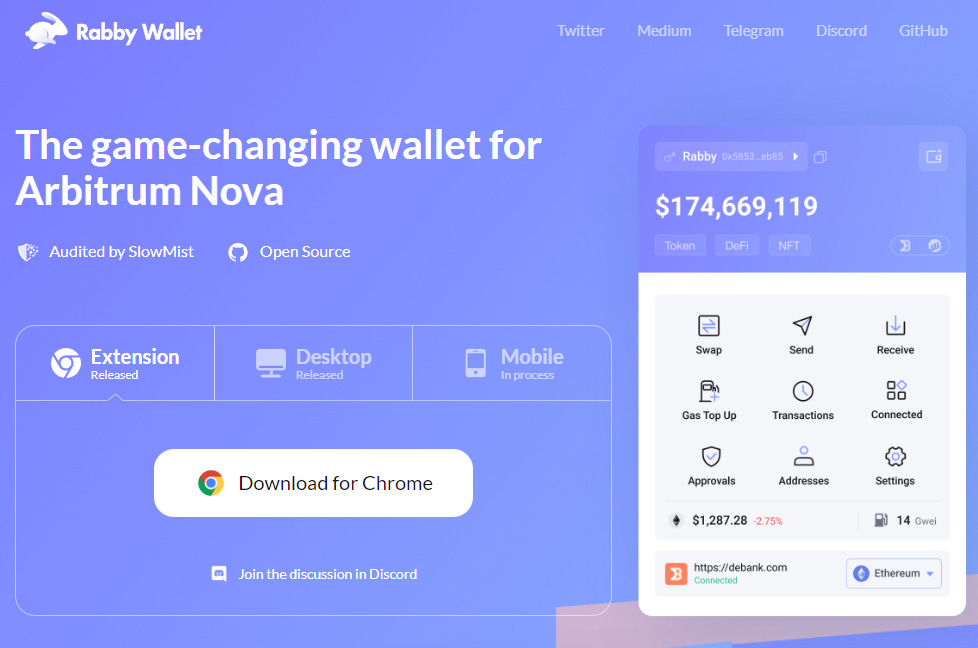
Why rabby stands out for multi‑chain users
I’ll be honest: I tried the rabby app because a colleague in Silicon Valley recommended it and I was curious. The onboarding was low‑friction. My first impression was that the UI respected my attention — no clutter. Something felt off the first two minutes though — I kept expecting pop‑ups; they didn’t come. On the technical side, Rabby emphasizes clear permission flows, cross‑chain balance visibility, and hardware wallet compatibility. If you want to check it yourself, here’s the place to get the extension: rabby.
What I liked: account isolation that actually behaves like separate identities; easy revocation of token approvals; and a transaction preview that shows the exact contract calls and estimated gas denominated in the native token. Those are medium things, but they compound into a much safer daily experience. On the flip side, some features are still evolving, so I wouldn’t call it perfect. I’m not 100% sure about certain edge case integrations, but the devs are active and responsive — that’s important.
Also worth mentioning: cross‑chain swaps. Many wallets add swap widgets that look great but route you through opaque bridges or DEXs with hidden slippage. Rabby surfaces routing choices and gives clear price impact warnings. My head nodded at that. On one hand it’s a convenience; though actually, it also reduces risk because I don’t need to jump into a chain‑specific wallet for a single swap.
Performance felt snappy on my laptop. Memory usage was reasonable, and tab isolation meant the wallet didn’t hoard resources when idle. That matters if you run a dozen tabs (guilty). There were small UI quirks — tiny spacing issues and the occasional tooltip that didn’t translate perfectly — but those are cosmetic and will likely be fixed. I’m picky. Also, I like the color scheme. Yep, shallow but true.
Security practices are what sold me. The extension encourages cold storage combos, offers hardware sign-in, and flags risky approvals. I tested a few simulated phishing scenarios (careful and controlled) and the wallet’s permission UX made it harder to accidentally approve suspicious contracts. That added layer of friction is exactly what I want — a gentle “are you sure?” that actually informs, not nags.
Common questions people ask me
Is one multi‑chain wallet less secure than many single‑chain wallets?
Not necessarily. Security depends more on how the wallet isolates accounts, presents approvals, and integrates with hardware wallets than on how many chains it supports. A single, well‑designed extension can reduce human error by centralizing revocations and permission history, which actually increases practical security.
Does rabby support hardware wallets and account abstraction?
Yes to hardware wallets — you can connect devices to sign transactions. Account abstraction features vary by chain and are evolving; rabby handles common patterns today and the team adds support as standards mature. I’m not 100% on every chain’s newest feature, but the roadmap is active.
How do I decide whether to switch?
Start small. Install the extension in a non‑primary profile, import a read‑only address or use a test account, and interact with a few dApps you trust. Watch how approvals show up and whether revocation is easy. If daily workflows are smoother and you feel less anxious about accidental permissions, it’s probably a keeper.
Look—I won’t pretend every wallet is a silver bullet. There’s tradeoffs. But if you’re tired of juggling extensions, tired of wondering which contract has transfer rights, or you just want a cleaner multi‑chain experience without sacrificing security, a modern browser wallet like rabby is worth testing. Try it during a slow afternoon, not during a high‑stakes trade. You’ll thank me later… maybe.
